What to Check on Your Roof After a Twin Cities Hail Storm
Hail marks everything it touches, and you can read most of it without ever climbing a ladder.
October 14, 2026 · 4 min read
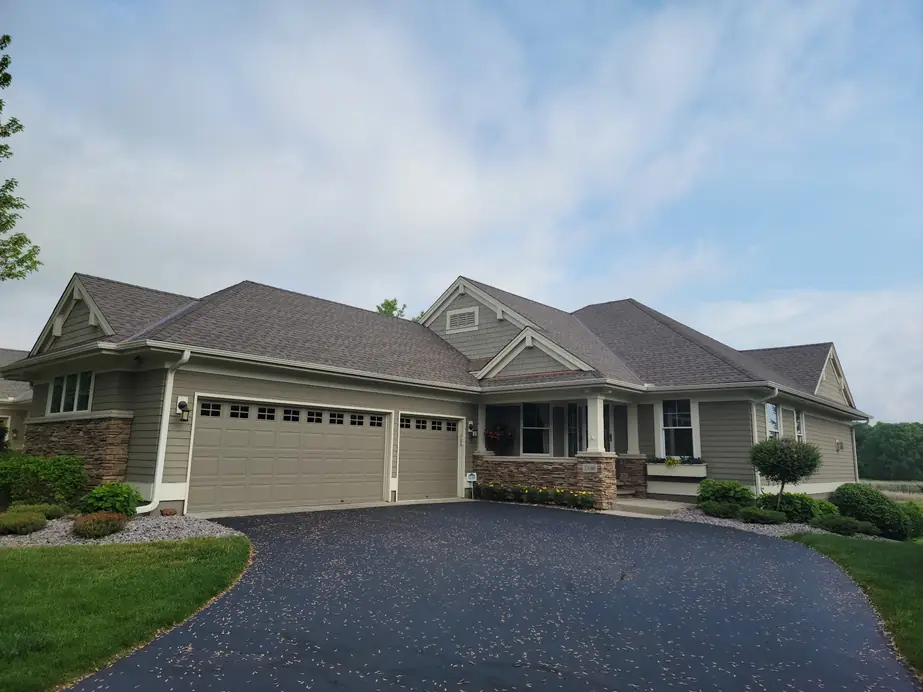
The morning after a hailstorm, walk your property before you think about the roof. Don't climb up there. A roof that is wet, frosty or steep is a bad place for a homeowner to be standing, and most of what you need to know is written on the ground and on the soft metal around the house. Hail is an honest witness. It marks everything it touches, and the cheap, thin things show it first.
Read the soft metal first
Walk the whole house and look at what dents easily. Gutters and downspouts, vent hoods on the siding, the chimney cap, the flashing around the garage door, the lid of the air conditioner condenser. Dents in thin metal tell you the hail arrived at a size and speed worth taking seriously. Check the side of the house that faced the wind, because a wind-driven storm often punishes one slope while the opposite one looks untouched. Then look at window screens, deck rails, painted trim and siding for fresh round scuffs. Those bright spots, where dirt or oxidation got knocked loose, fade after a rain or two, so photograph them with the date while they are easy to see.
Look at the yard too. Shredded hosta leaves and bruised tomatoes tell the same story. And ask the neighbors what they saw. Hail falls in narrow bands, and your street can take a beating while the next one over gets plain rain. A quick text to the house across the road is a legitimate part of the check.
What damage looks like on an asphalt shingle roof
If you can see the roof safely from the yard, from an upstairs window, or through binoculars, you are looking for a few specific signs. Granule loss shows up as dark, shiny, round spots where the mineral surface has been knocked off and the black asphalt is showing. Bruises feel soft when pressed and sometimes show as a slight dimple. In harder hits the fibreglass mat inside the shingle cracks, and you will not spot that from the ground at all. Pay attention to the ridge caps and the plumbing vent boots as well. Both take direct hits, and both are places where a leak tends to start.
- Fresh dents in gutters, downspouts, vent hoods and the condenser lid
- Round, bright spots where granules were knocked off the shingles
- A pile of loose granules at the bottom of a downspout or on the driveway
- Cracked or dented plumbing vent boots and ridge caps
- Scuffs and dents on window frames, siding and the garage door
- Torn screens and shredded plants
Why a quick look from the ground isn't enough
Here is the problem with checking it yourself. The worst hail damage does not announce itself. A bruised shingle can look fine from thirty feet away and then shed granules for a season, and a cracked mat can sit quietly until a freeze-thaw cycle works on it. Minnesota winters are hard on any roof that has been compromised. Meltwater creeps into the crack, refreezes, and pries it wider. A roof that looked acceptable in July can start leaking at the first spring thaw, long after anyone connected it to the storm. That delay is one more reason to have it looked at while the storm is fresh and you can say exactly when it happened.
Flat sections, metal panels and skylights
Not every roof is shingles. If you have a flat or low-slope section over a porch or an addition, hail can bruise the membrane or open a seam, and water pools wherever the damage is. Metal panels may show dents that are only cosmetic, or they may have damaged coatings and fasteners, and only someone who knows the panel type can tell which. Skylights deserve a close look as well, since the glazing and the flashing around the curb are both exposed.
Why the inspection costs you nothing with Austad
Austad Construction offers free hail damage inspections, and it is worth taking up even if you aren't sure you have a problem. Austad is a family-owned roofer based in Little Canada, in business since 1997, and a free look is the quickest way to turn 'I think there might be damage' into a clear answer. You can use that answer however you like, including as the starting point for a second opinion. Plenty of homeowners collect several estimates, and that is a sensible thing to do.
If you decide to file with your insurance company, read your policy for its deadline on reporting storm damage and call your agent early. Austad can't tell you what your policy will cover, and nobody honest will promise an outcome before an adjuster has looked at the roof. What you can do is document: dated photos of the dents and scuffs, the date and time of the storm, and a written note from whoever inspected the roof. If there is an active leak, ask the roofer about a temporary tarp so the damage doesn't grow while you wait.
To book a free hail damage inspection, call Austad at (651) 482-0070 or use the estimate form on this site. Calls and emails get an answer the same business day.
Austad Construction, (651) 482-0070
Call (651) 482-0070More articles
Standing Seam Metal or Class 4 Shingles for a Minnesota Home?
Both roofs are built for hail and hard winters, and they go about it in very different ways.
TPO, EPDM, PVC or Built-Up: Choosing a Commercial Flat Roof
Those letters are families of roofing systems, and each one suits some buildings better than others.